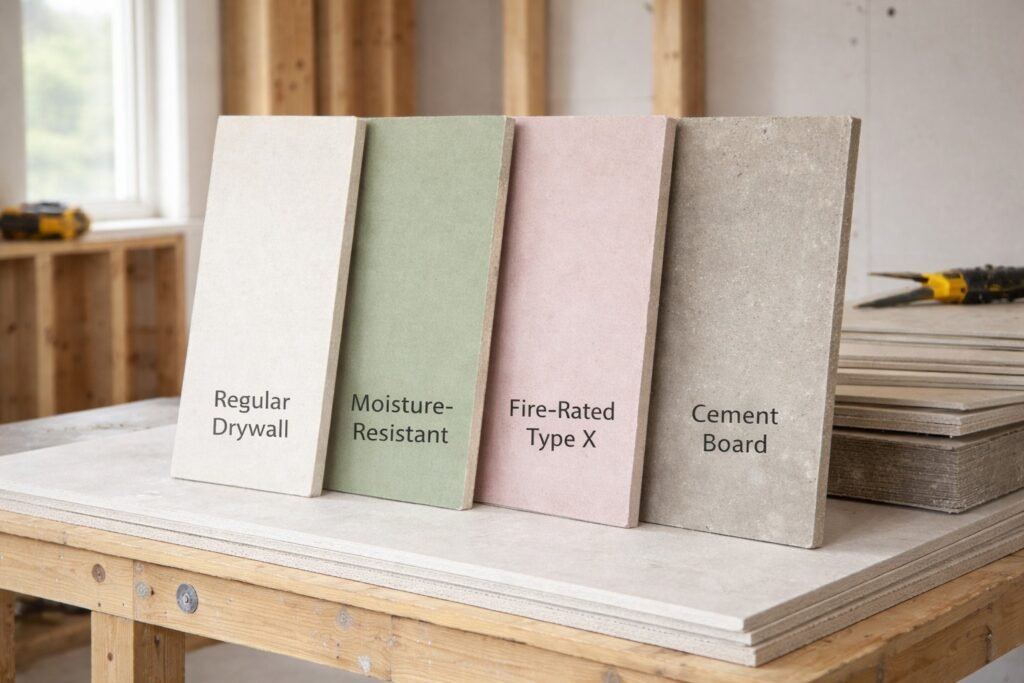
Gypsum board thickness and type play a critical role in the performance, safety, and longevity of any drywall system. Not all gypsum board is the same — each option is engineered for specific conditions such as moisture exposure, fire resistance, sound control, and structural demands. Choosing the correct board from the start helps prevent future issues like cracking, mold growth, noise transfer, or failed inspections.
At AJF Painting & Drywall Corp, we help clients throughout Westchester County, NY and Fairfield County, CT select the proper gypsum board thickness and type for every space, ensuring durability, compliance with local building codes, and a smooth, high-end finish.
Understanding Gypsum Board Thickness and Types
Selecting drywall is not just about appearance. The thickness and composition of gypsum board directly affect how a wall or ceiling performs over time. Using the wrong material can lead to sagging ceilings, moisture damage, reduced fire protection, or unnecessary noise between rooms.
Below is a breakdown of the most common gypsum board types and where each one should be used.
Proper gypsum board selection also plays a key role in achieving a smooth finish. Learn more about our approach to professional drywall installation in our guide on common drywall installation mistakes.
Regular Drywall (White Board)
Best for:
Living rooms
Hallways
Bedrooms
Dining rooms
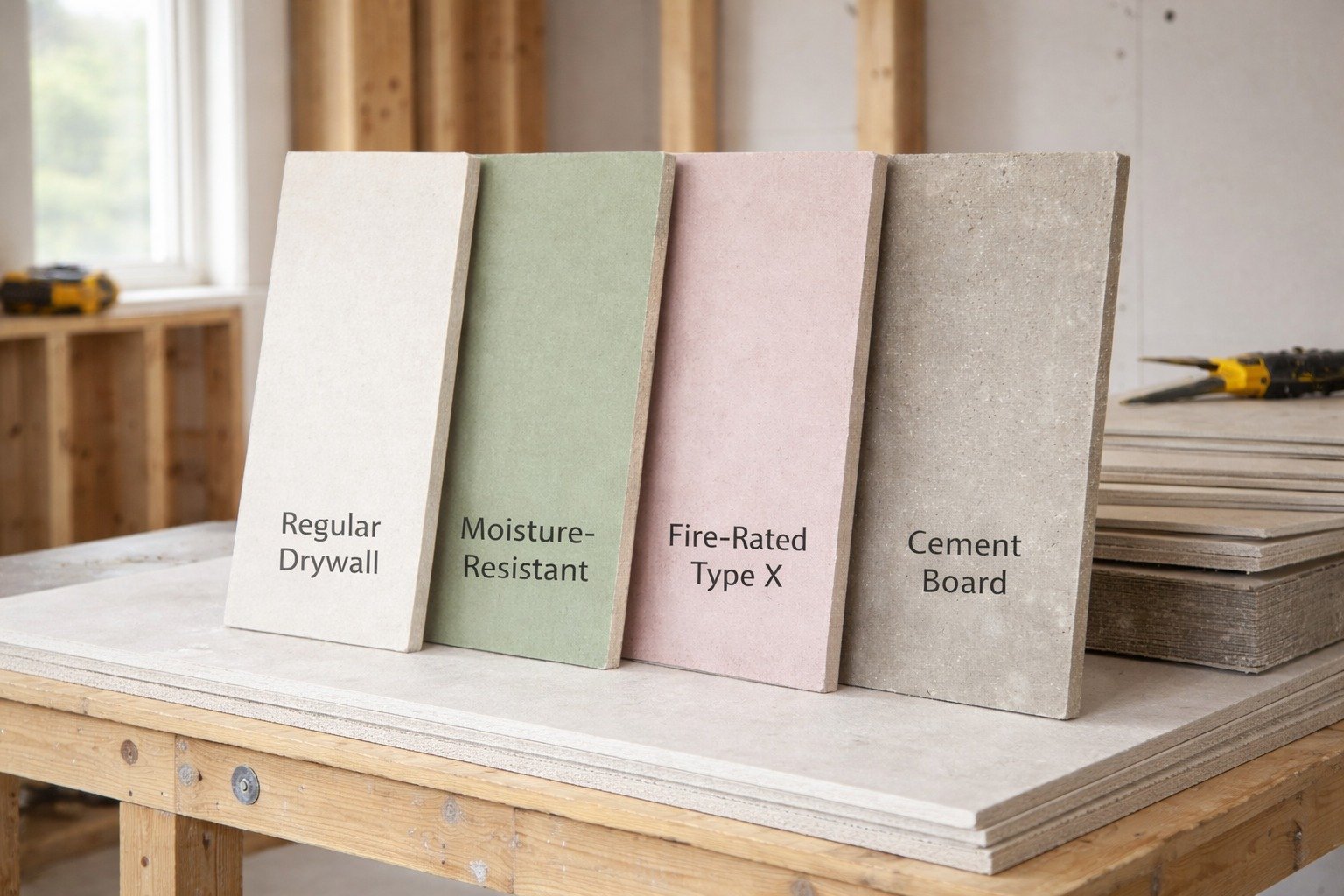
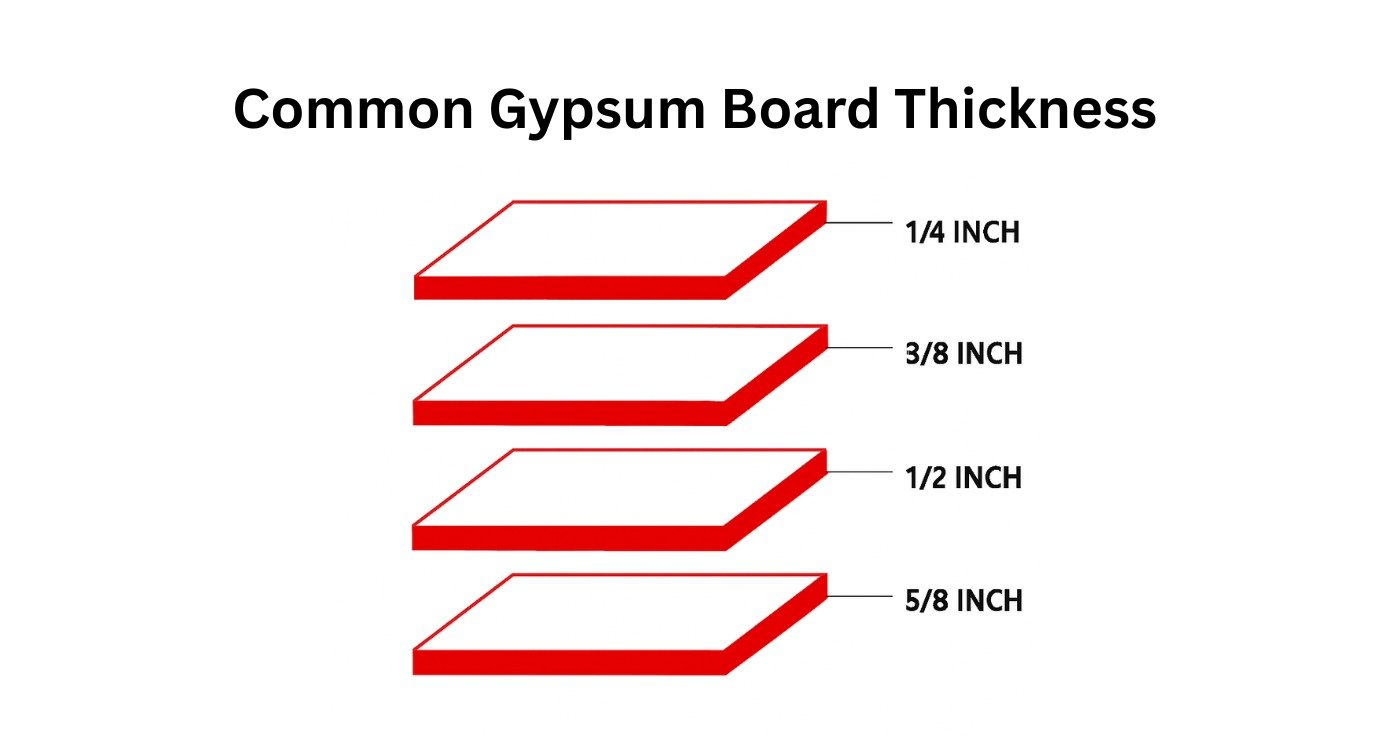
Standard white drywall is the most commonly used gypsum board in residential interiors. Typically installed in 1/2-inch gypsum board thickness, it provides a solid, smooth surface for paint or wallpaper in dry, climate-controlled areas.
Moisture-Resistant Drywall (Green Board)
Best for:
Bathrooms (outside shower or tub enclosures)
Laundry rooms
Utility rooms
Basements
Moisture-resistant drywall is designed to handle higher humidity levels than standard drywall. While often installed in the same gypsum board thickness as regular drywall, it includes moisture-resistant paper facing to reduce the risk of mold. However, it is not waterproof and should not be used in direct water exposure.
Cement Board / Fiber Cement Board
Best for:
Showers and tub surrounds
Tile backer applications
Areas exposed to direct water
Cement board contains no paper facing and offers superior resistance to water and mold. Unlike traditional gypsum board thickness options, cement board is heavier and more rigid, making it ideal for tile installations where long-term moisture exposure is expected.
Fire-Rated Drywall (Type X Gypsum Board)
Best for:
Garages
Furnace and mechanical rooms
Basements
Multi-unit or attached homes
Fire-rated drywall, commonly installed in 5/8-inch gypsum board thickness, contains fire-resistant additives that slow flame spread. This type is often required by building codes in specific areas to improve fire separation and overall safety.
Sound-Dampening Drywall
Best for:
Home offices
Bedrooms
Media rooms
Multi-family residences
Sound-dampening drywall is engineered to reduce noise transmission between rooms. Its increased density and specialized core composition go beyond standard gypsum board thickness to improve acoustic performance and privacy.
Paperless Drywall
Best for:
High-moisture environments
Mold-sensitive areas
Paperless drywall uses fiberglass facing instead of traditional paper, reducing the risk of mold growth. It is an excellent option for basements, bathrooms, or any space where humidity control is a concern.
Why Choosing the Right Gypsum Board Thickness and Type Matters
The correct gypsum board thickness and material directly influence:
Moisture resistance
Fire protection
Sound control
Structural durability
Long-term performance
Matching the right board to the right room helps protect your investment, improves comfort, and ensures a clean, professional finish that lasts.
For more detailed industry standards, refer to guidelines published by the
Gypsum Association.
Frequently Asked Questions About Gypsum Board
Is moisture-resistant drywall waterproof?
No. It resists humidity but is not designed for direct water exposure. Showers and wet areas require cement board.
Is Type X drywall required in every home?
No. It is required in specific areas such as garages or mechanical rooms, depending on local building codes.
Does sound-dampening drywall really make a difference?
Yes. It significantly reduces noise transfer between rooms when properly installed.
Can different gypsum board types be used in the same project?
Absolutely. Professional installations often combine multiple gypsum board thicknesses and types based on room conditions and code requirements.